


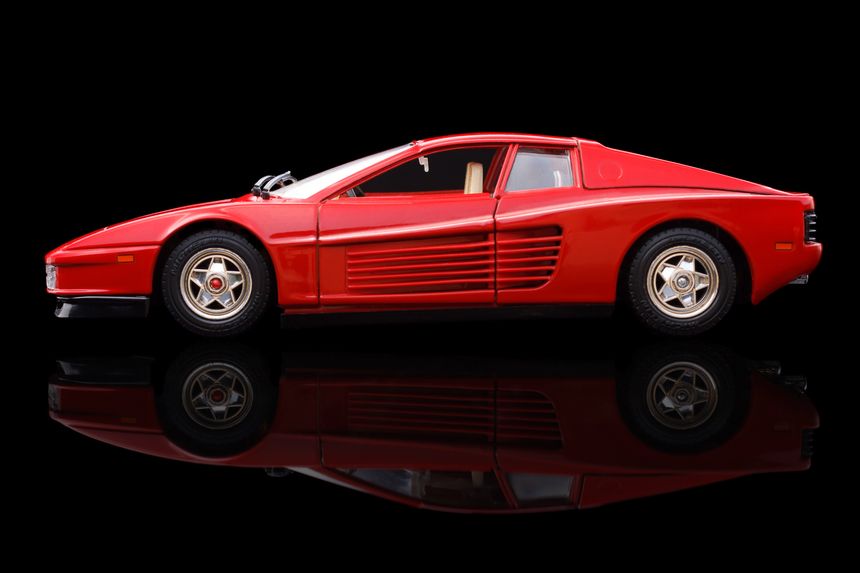

On 2 July 2025, the General Court of the European Union (GC) delivered two landmark judgments (T‑1103/23 and T‑1104/23), both concerning Ferrari’s word mark TESTAROSSA. The cases arose from revocation actions before the EUIPO for alleged non‑use. The GC annulled both revocation decisions, holding that Ferrari had demonstrated genuine use of the mark notably in connection with automobiles. These rulings reaffirm the breadth of the concept of 'genuine use' under EU trade mark law and highlight how legacy brands can preserve rights through second‑hand markets, licensing, and the sale of spare‑parts.
Background
Ferrari SpA (‘Ferrari’) began the production of Testarossa cars back in 1984 and ceased manufacturing them in 1996. In 2006, Ferrari registered the word mark TESTAROSSA as an International Registration (under No. 910752) designating the European Union. The registration covered goods in several classes, including automobiles, spare parts and accessories (Class 12), and scale model vehicles (Class 28).
In November 2014 and September 2015, Mr. Kurt Hesse (‘KH’) filed two separate revocation actions against the EU designation (one challenging Class 12 and the other Class 28), on the ground that Ferrari had not put the TESTAROSSA mark to genuine use for a continuous five‑year period.
The relevant periods under consideration were between 2009/2014 and 2010/2015, years after the production of Testarossa cars had ceased.
The EUIPO’s Cancellation Division partially upheld the revocations, accepting use of the mark only in respect of class 12 “automobiles” and class 28 “scale toy land motor vehicles”. The EUIPO’s Board of Appeal (‘BoA’) upheld the first instance decisions, prompting Ferrari’s appeals before the General Court.
The GC’s reasoning
The GC delivered two judgments dealing with the same mark, the same parties and related issues in the context of proof of use—T‑1103/23 (concerning automobiles, spare parts and accessories (Class 12)) and T‑1104/23 (concerning scale model vehicles (Class 28)).
Although arising from distinct EUIPO BoA decisions, the cases addressed the same legal questions: whether the sale by third parties of second-hand cars under the TESTAROSSA mark constituted genuine use and whether the use of this mark in relation to certification services or spare parts of vehicles could also constitutes genuine use of the cars themselves.
Second-hand sales and Ferrari’s implied consent
It is settled case law that the resale by the trade mark owner, or with its consent, of second-hand products, constitutes genuine use of the mark in relation to said products. In this matter, the Board of Appeal noted that Ferrari was not directly selling second-hand cars bearing the TESTAROSSA mark and had not proven that the various dealers and distributors reselling those cars or scale model vehicles were authorised to do so. An implied consent cannot be inferred from the mere fact that Ferrari was aware of the use of the mark by a third party and did not oppose it. Accordingly, these sales did not constitute genuine use of the TESTAROSSA mark by Ferrari for the BoA.
The GC disagreed with this finding. It noted various invoices relating to the sale of TESTAROSSA second-hand cars, featuring the words “authorised Ferrari dealer”. These showed that Ferrari had economic and contractual links with these dealers. Likewise, the packaging of the scale model Testarossa vehicles and distributors’ catalogues included the mention “Ferrari Official Licensed Product”.
The GC recognised that it is common practice in the vehicle industry for cars to be marketed both under a trade mark designating their manufacturer, here FERRARI, and the second mark designating the model, here TESTAROSSA, both marks being intrinsically linked. Accordingly, a dealer or distributor authorised by Ferrari is deemed to be authorised to market all of that manufacturer’s car models. This constitutes an indication that the sale was conducted with the consent, albeit implied, of Ferrari.
The offering of services directly connected with the goods can constitute genuine use for both the services and said goods
The GC reiterated the settled case law that actual use by the proprietor of a trade mark, registered in respect of certain goods, for services which are directly connected with the goods previously sold and intended to meet the needs of customers of those goods, is capable of constituting “genuine use” of that mark.
In this regard, Ferrari produced invoices addressed to various customers in the EU, showing services of certification. The purpose of these services was to certify the authenticity of second-hand cars bearing the TESTAROSSA mark. It was shown that the certification service relates directly to sales of second-hand cars bearing the TESTAROSSA mark by authorised dealers and establishes, in return for payment and after the necessary checks, that the car in question was an original Testarossa model. The certification service therefore also constitutes genuine use for the cars themselves.
The GC concluded that Ferrari impliedly consented to the use of TESTAROSSA in relation to vehicles in class 12.
Spare parts and accessories
The GC considered that the BoA’s reasoning was flawed, as it did not take into account Ferrari’s implied consent (for the same reasons as above discussed) and dismissed invoices issued by authorised distributors containing numerous references to parts and accessories designated specifically by TESTAROSSA considering them to be “isolated cases”. The GC reminded that this finding relates to the “extent of use of the mark”, not the “nature of that use”.
Accordingly, the GC held that the EUIPO's decision was vitiated by errors of assessment. The GC annulled the EUIPO’s revocation decisions in both appeals.
Key implications for Trade Mark Owners
These decisions have significant implications for owners of legacy and luxury brands:
Genuine use can be maintained through second‑hand sales, certification, and spare parts supply. This means that genuine use is not confined to the first marketing of goods, especially for long-lived or collector-grade products such as high-end automobiles. Commercial activity in the secondary market-resale, maintenance, refurbishment, certification of authenticity, and the supply of spare parts- may sustain the ongoing market presence of the original goods, or expand market share for products no longer manufactured, thereby satisfying the legal threshold for genuine use even in the absence of new production runs.
Implied consent for use by authorised dealers or licensees may suffice to show genuine use of the mark. Longstanding commercial arrangements, authorised dealership activity, and ongoing brand-controlled exploitation of the mark demonstrates the proprietor’s consent. This reinforces that genuine use may be proven through implicit or established commercial practice, provided the proprietor retains control over the nature of the use and the mark continues to indicate commercial origin.
Use on spare parts or accessories can support continued protection for the main product category. These products remain economically linked to the original product placed on the market. In other words, such use is not ancillary but forms part of the commercial lifecycle of the principal goods. Since these activities preserve the utility, desirability, and authenticity of the underlying automobiles, they constitute use in relation to the main product category, thereby supporting continued trade mark protection for the core goods even where production ceased.
Brand owners should document all channels of commercial exploitation to demonstrate genuine use. Both rulings illustrate that genuine use may arise from diverse forms of market engagement across a product ecosystem, particularly where products remain in circulation long after production ceases. Accordingly, rights holders should adopt a comprehensive evidence-gathering strategy, documenting not only sales data but also authorised third-party activities, licensing agreements, product certification, aftersales services, and other brand-controlled initiatives. Thorough documentation strengthens the evidential basis for demonstrating genuine use.
/Passle/5f3d6e345354880e28b1fb63/MediaLibrary/Images/2025-09-29-13-48-10-128-68da8e1af6347a2c4b96de4e.png)
/Passle/5f3d6e345354880e28b1fb63/MediaLibrary/Images/2024-08-01-13-11-10-549-66ab896ee543bf94f9636c73.png)
/Passle/5f3d6e345354880e28b1fb63/SearchServiceImages/2026-10-19-16-18-46-089-6ad642e60d35d5e97b57690e.jpg)
/Passle/5f3d6e345354880e28b1fb63/MediaLibrary/Images/2024-08-23-11-31-07-354-66c872fb971eecc249d83d40.png)