


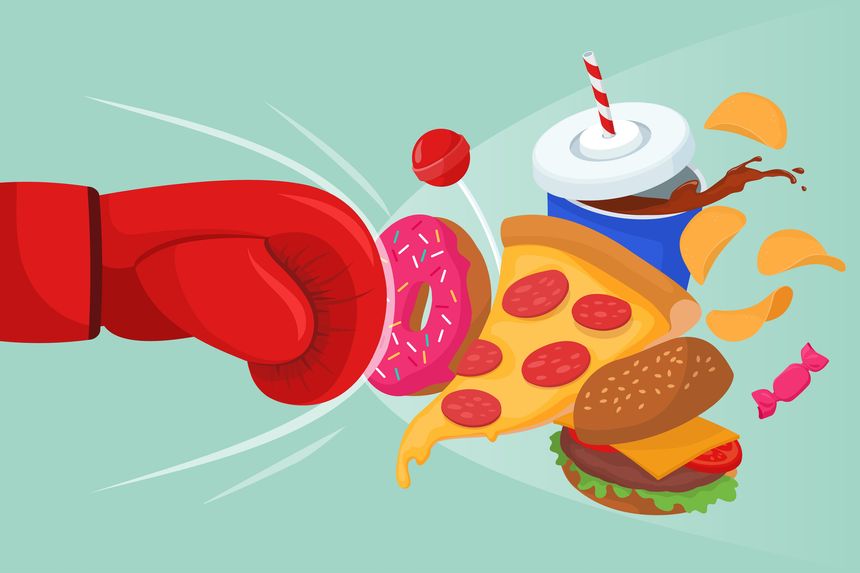


Advertisers will need to think twice before letting their mascots, jingles or signature colourways loose on TV or online, as new restrictions on “less healthy” food and drink ads came into force in the UK from 5 January 2026.
The ASA has published detailed guidance on the UK’s new restrictions on advertising less healthy food (LHF) and drink products, reflecting the changes introduced by the Health and Care Act 2022 and inserted into the Communications Act 2003. The new rules significantly narrow the circumstances in which LHF products can be advertised.
What is prohibited?
Ads for identifiable LHF products are now banned from:
- TV and on-demand programme services between 5.30 am - 9 pm.
- The internet, at any time, if paid-for and targeting UK consumers.
What counts as a “less healthy” food product?
A product is caught by the prohibition if:
- it falls within one of the categories listed in the Advertising (Less Healthy Food Definitions and Exemptions) Regulations 2024 (e.g. soft drinks with added sugar, savoury snacks, breakfast cereals, pizzas, ready meals); and
- it is classified as HFSS under the Department for Health and Social Care 2004-05 nutrient profiling model.
Only products that meet both parts of the test are within the scope of the restrictions.
… but when is a LHF product “identifiable”?
The “identifiability” test
The key question is whether the average consumer can reasonably be expected to identify the ad as being for a specific LHF product. Having a specific LHF product as the focus of the ad’s promotional message is very likely to meet the identifiability test – in particular, text or audio references to a specific LHF product or imagery of the product with or without its packaging (e.g., the famous “you’re not yourself when you’re hungry” Snickers ads featuring someone eating a delicious looking chocolate bar).
Clear product imagery, pack shots of specific LHF products, distinctive product branding or flavour references are all likely to be high risk under the new rules.
Even where no product is shown, a combination of branding cues (logos, colourways, characters or jingles strongly associated with a particular product – think Tony the Tiger, Colonel Sanders or even the famous red of Heinz ketchup) can still cause an ad to fall foul of the rules if the ASA consider it identifies a specific LHF product.
How do the rules apply to modern advertising?
The scope of the new rules is very wide and addresses most forms of modern advertising:
- Product listings: listings on retails sites or delivery apps are out of scope unless the listing is afforded enhanced prominence on the site app or in search results.
- Social media: posts by companies from their own social media accounts are not within scope provided payment is not involved in the placement of posts. Paid-for ‘promoted’ or ‘boosted’ posts are banned.
- Influencer marketing: reciprocal and affiliate relationships and arrangements such as the gifting of products is likely to be included. Where consideration is provided for an influencer to create content for the influencer’s social media channels, the resulting content is likely to be prohibited. It is even possible that #gifted posts could be caught if promoting an identifiable LFH product. However, if an influencer is paid by an advertiser to create and/or feature in an ad that will be posted on the advertiser’s own social media channels, it probably steers clear of the prohibition.
Key exemptions
There are several exemptions which narrow the scope of the restrictions:
- Small or Medium-Sized Enterprise (SMEs) advertisers: the new rules do not apply to advertisers with fewer than 250 employees. However, the framework does not distinguish between different types of advertisers. As a result, ads from non-SME advertisers that are not directly involved in supplying food or drink products could still fall within scope (for example, food and drink delivery services).
- Type of media: only Ofcom-regulated TV, ODPS and paid-for online ads are caught by the prohibition. The rules do not apply to advertisers’ own marketing communications appearing on their own websites or other non-paid-for space online under their control such as marketers’ own social media channels or apps where no payment for the placement of an ad is involved.
- Brand advertisement: ads promoting a brand or a range of products (rather than a specific product) may be exempt. This includes imagery that is representative of a brand or range of products (e.g. the PepsiCo logo), generic product imagery (e.g. a stylised representation of a type of product or ingredients used in its preparation – such as images highlighting flavours like vanilla and coffee, which are not in themselves LHF products) and generic product-related imagery such as an item of packaging common to several products. However, advertisers should use caution when including food or drink products or related imagery in brand ads, as well as brand characters that are personifications of a specific LHF product (e.g. the talking M&Ms, Freddo, Percy Pig). Additionally, the exemption does not apply to ads that promote a brand name which is the name of a specific LHF product (e.g. Coco Pops, Chupa Chups), unless that name has been included in the company’s name or used in marketing since before 16 July 2025. An example of an ad that would benefit from this exemption is an ad highlighting a company’s CSR efforts without promoting its products.
Key takeaways
The new regime marks a major shift for large food and drink manufacturers, especially in the context of online marketing. While brand advertising remains possible for these businesses, careful attention will need to be paid to avoiding specific LHF product imagery.
/Passle/5f3d6e345354880e28b1fb63/MediaLibrary/Images/2025-09-29-13-48-10-128-68da8e1af6347a2c4b96de4e.png)
/Passle/5f3d6e345354880e28b1fb63/MediaLibrary/Images/2026-10-14-13-50-16-944-6acf8898a81c552c14eaf07b.jpg)
/Passle/5f3d6e345354880e28b1fb63/SearchServiceImages/2026-10-22-14-14-40-225-6ada1a50ce5decc884c006bd.jpg)
/Passle/5f3d6e345354880e28b1fb63/MediaLibrary/Images/2024-08-01-13-11-10-549-66ab896ee543bf94f9636c73.png)